EQAI – European Summer School on Quantum AI

AILAB-Udine is proud to be one of the organizers of the European Summer School on Quantum AI, (EQAI), which has been held yearly since 2022. Find the latest updated information on the official website:http://eqai.eu Or subscribe to the official google group to be notified of any major update!https://groups.google.com/g/eqai The summer school will take place in Lignano Sabbiadoro (Italy) on August 31 – September 04, 2026.All the speakers will be there in person to make the experience more immersive and interactive! Find out more about the past editions at: https://eqai.eu/past-editions/ EQAI 2025 – Details The summer school will take place in Lignano Sabbiadoro (Italy) on September 01 – 05, 2025.All the speakers will be there in person to make the experience more immersive and interactive! EQAI 2024 – Details The summer school will take place in Lignano Sabbiadoro (Italy) on September 02 – 06, 2024. EQAI 2023 – Details The summer school will take place in Udine (Italy) on May 29 […]

Quantum Machine Learning for the Noisy Intermediate-Scale Quantum Era

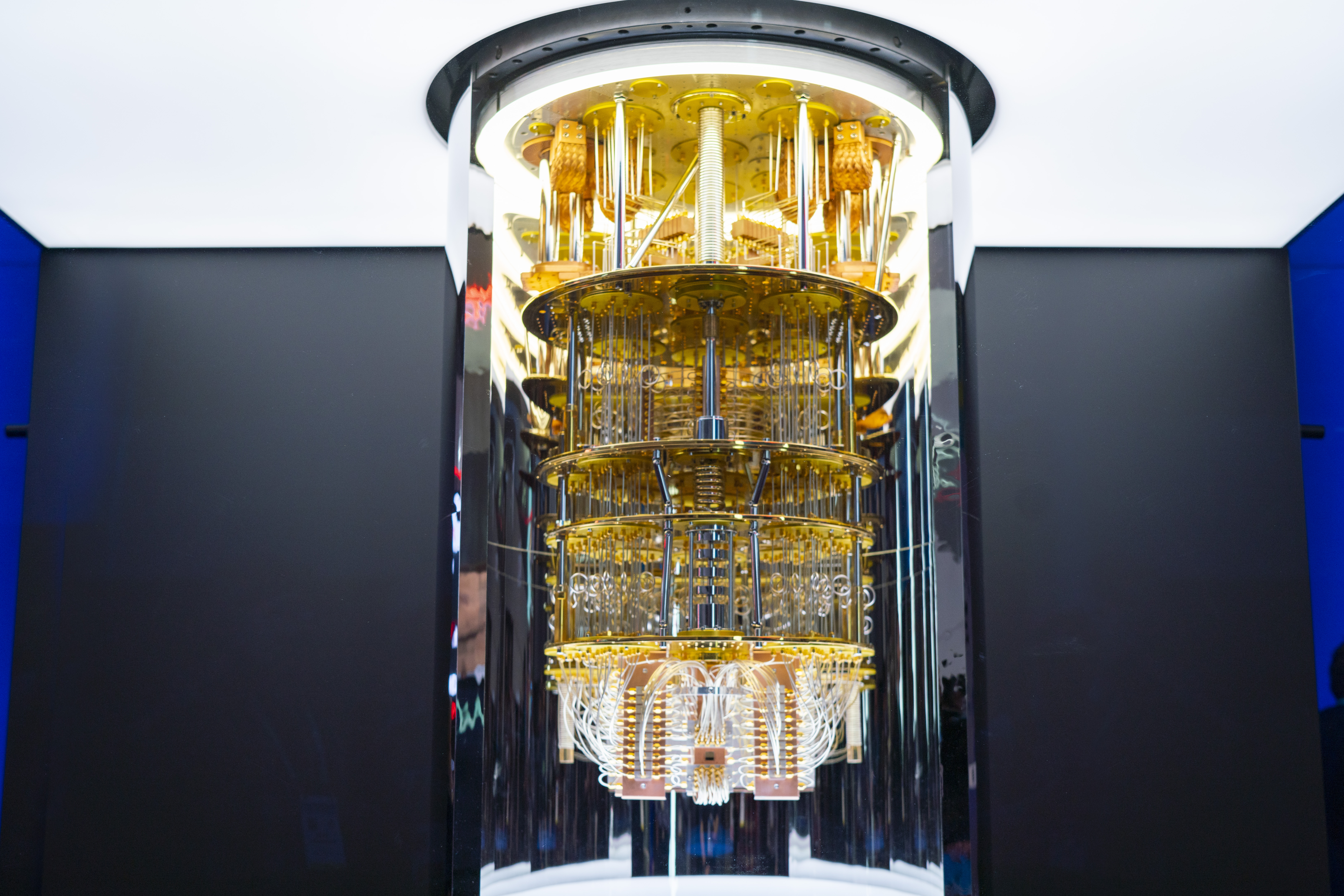
Quantum machine learning (QML) is an emerging field that combines the principles of quantum computing with classical machine learning techniques. It aims to exploit the unique properties of quantum systems, characterised by their ability to perform computations exponentially faster than classical devices, to improve the processing and analysis of complex data. This advance makes QML a very promising frontier. However, in the current Noisy Intermediate-Scale Quantum (NISQ) era, characterised by the presence of noise in quantum devices that limits their scalability, it is crucial to develop specific techniques to fully exploit quantum capabilities. This research focuses on the development and optimisation of QML models suitable for NISQ environments. A key aspect of our work is to adapt established optimisation methods from classical machine learning, such as batch normalisation and regularisation, for use in Quantum Neural Networks (QNNs). The project also explores the potential of Quanvolutional Neural Networks and Quantum Kernel methods. These efforts are aimed at improving the functionality and […]


Metaverse Understanding

In recent years, the Metaverse has sparked an increasing interest across the globe and is projected to reach a market size of more than $1000B by 2030. This is due to its many potential applications in highly heterogeneous fields, such as entertainment and multimedia consumption, training, and industry. This new technology raises many research challenges since, as opposed to the more traditional scene understanding, metaverse scenarios contain additional multimedia content, such as movies in virtual cinemas and operas in digital theaters, which greatly influence the relevance of the metaverse to a user query. For instance, if a user is looking for Impressionist exhibitions in a virtual museum, only the museums that showcase exhibitions featuring various Impressionist painters should be considered relevant. We introduce the novel problem of text-to-metaverse retrieval, to support the users in finding the most suitable metaverse according to a given textual query. It is a challenging task, since the multimedia content present in the metaverse greatly influences […]


AI for Forestry Applications

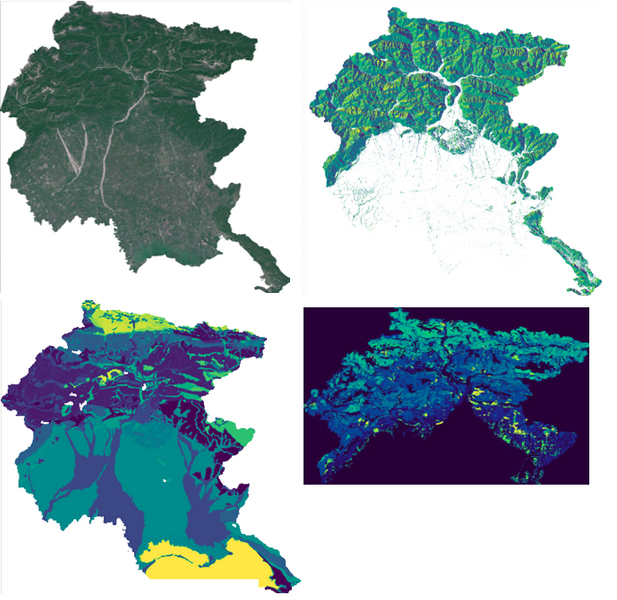
This research project focuses on the application of machine and deep learning methods for forestry applications. In particular, the main focus is forest growing stock prediction in the Friuli Venezia Giulia region (Italy), but the developed methods can be applied to produce estimations of biophysical forest attributes on any large territory. This study will take into account different sources of data such as Forest inventory data from Nationla surveys, multispectral satellite images, climatic data and various environmental features collected through different services. Several methods will be applied to produce a forest-growing stock volume map, which will be useful to create management plans for forestry areas in the region. Traditionally, the growing stock is considered an important indicator of forest health and productivity. The growing stock is estimated through forest inventory under which both qualitative and quantitative parameters are recorded to know the overall health of growing forests. So, we will produce the results that can be considered as a basis […]


Digital Humanities

Inscriptions are a testimony to the past but their poor condition, caused by the deterioration of the material on which they are engraved upon, often makes them partially or completely illegible. The process of restoring these inscriptions is time-consuming and requires the involvement of an expert epigraphist. It is possible to speed-up this process by adopting a semi-automatic assisting tool based on deep neural networks. This project aims to develop a complete methodology, from the acquisition of the inscriptions, to the description of four possible approaches to predict the missing text in a Latin inscription, that our research team plans to implement in the near future as part of a interdisciplinary research project. Related publications: Alessandro Locaputo, Beatrice Portelli, Emanuela Colombi, Giuseppe Serra. Filling the Lacunae in ancient Latin inscriptions. 19th The Conference on Information and Research science Connecting to Digital and Library science (IRCDL), 2023. [pdf] Andrea Brunello, Emanuela Colombi, Alessandro Locaputo, Stefano Magnani, Nicola Saccomanno, Giuseppe Serra. Usage […]


Semantic Text-video Retrieval

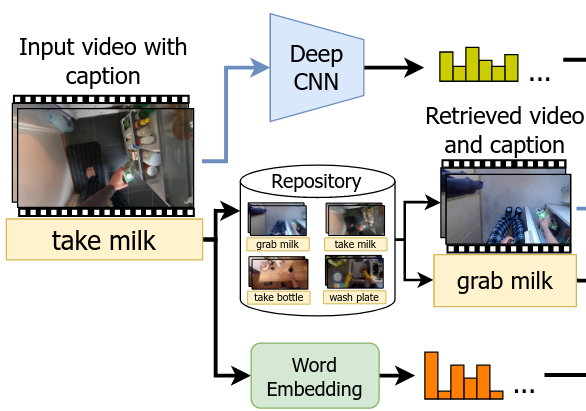
The text-to-video retrieval task requires to rank all the videos in a database based on how semantically close they are to an input query. To do so, both the visual and the textual contents need to be carefully analyzed and understood, meaning that a wide range of Computer Vision and Natural Language Processing techniques are required. Despite the intrinsic difficulty of such a problem, it is a fundamental one: in fact, nowadays several hundreds of hours of video content are uploaded to the Internet every minute, therefore solutions to this important problem are fundamental to perform searches effectively and retrieve all the videos which the user is looking for. Moreover, considering the need for multi-modal content understanding, advancements in this field may lead to improvements in many other problems, including Captioning and Question Answering. EPIC-Kitchens-100 Multi-Instance Retrieval Challenge tech reports: Alex Falcon, Giuseppe Serra. UniUD Submission to the EPIC-Kitchens-100 Multi-Instance Retrieval Challenge 2023. We ranked 3rd using only 25% of […]


Atomistic Graph Neural Networks for metals: Application to bcc iron

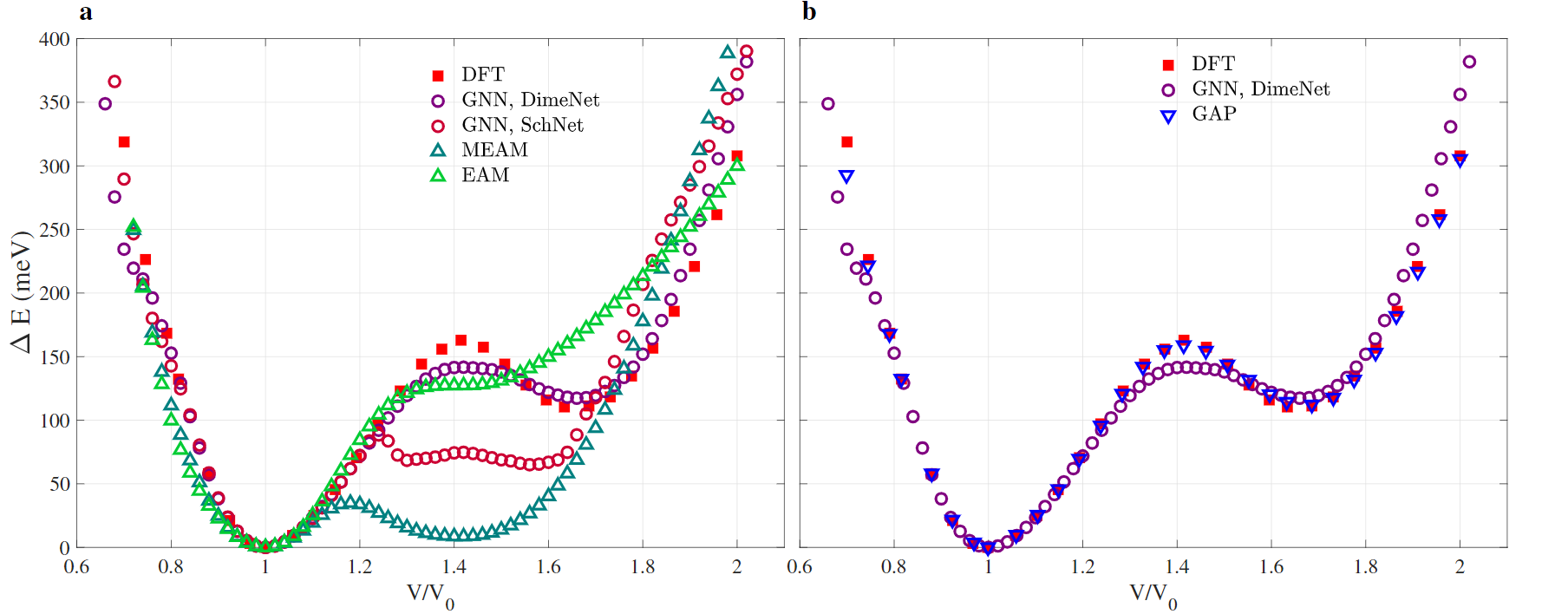
The useful, macroscopic characteristics of materials depend on their microscopic structure. Which is basically a very regular graph. At AILAB we applied Graph Neural Networks to the analysis of materials at atomic scale. After an extended testing phase, we obtained good results in the prediction of a set of physical properties such as Energy-Volume relation, Bain path curve, and evaluation of point and surface defects. This is a new research topic in Deep Learning, and will become more and more important in the near future thanks to its flexibility. Have a look at our arxiv paper Research Group: Lorenzo Cian (AILAB-Udine) Giuseppe Lancioni (AILAB-Udine) Lei Zhang (University of Groningen) Mirco Ianese (AILAB-Udine) Nicolas Novelli(AILAB-Udine) Giuseppe Serra (AILAB-Udine) Francesco Maresca (University of Groningen)


ADE Extraction at EACL21

Thanks to our continuous research on Adverse Drug Event Extraction, we will be at EACL 2021 (19th – 23rd April, 2021) with our latest paper: “BERT Prescriptions to Avoid Unwanted Headaches: A Comparison of Transformer Architectures for Adverse Drug Event Detection“ We explore the capabilities of wide variety of BERT-based architectures on the task of ADE extraction from social media texts.In particular we focus on the use of in-domain knowledge during pretraining, answering the question on whether (and which extent) it can actually help in this scenario, and giving some useful “prescriptions” for future research on this field. Research Groupโ€“ Beatrice Portelli (AILAB-Udine) โ€“ Edoardo Lenzi (AILAB-Udine) โ€“ Simone Scaboro (AILAB-Udine) โ€“ Giuseppe Serra (AILAB-Udine) โ€“ Emmanuele Chersoni (Hong Kong Polytechnic University) โ€“ Enrico Santus (Bayer) Featured pagesโ€“ ADE extraction project at AILAB-Udineโ€“ ADE at AILAB-Udine: top results on SMM4H’19


Adverse Drug Event extraction: top results on SMM4H’19 Shared Task

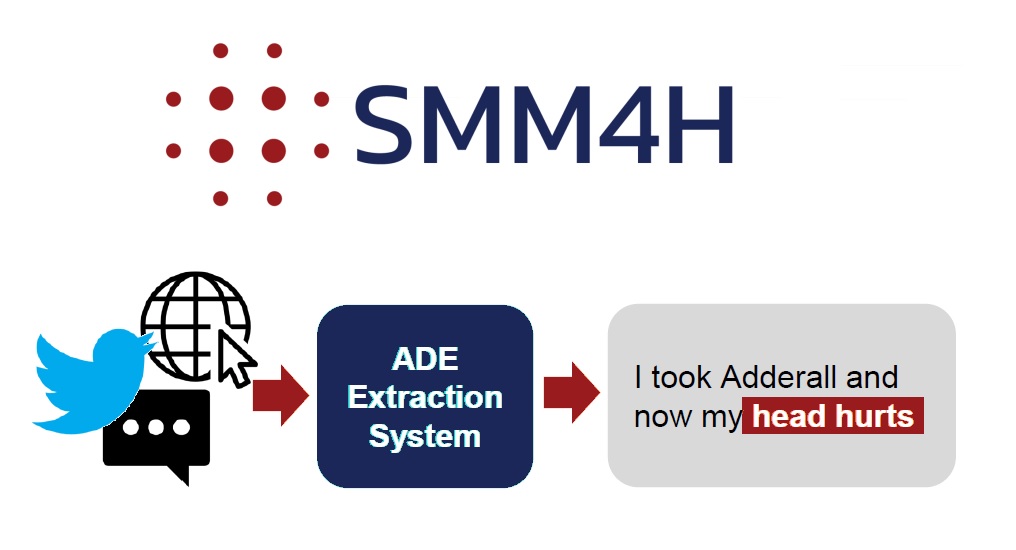
Pharmacovigilance monitors the drugs in the market to ensure that unexpected effects (Adverse Drug Events or ADEs) are immediately identified and actions are taken to minimize their harm. Patients have started reporting such ADEs on social media, health forums and similar outlets instead of using formal reporting methods. Given the need to monitor these sources for pharmacovigilance purposes, systems for the automatic extraction of ADE are becoming an important research topic in the NLP community and recent Shared Tasks on the topic of ADE extraction have attracted numerous focused contributions. Our research group has been working on an architecture for automatic ADE extraction from social media texts, with a focus on maintaining high performances on different text typologies (from short and noisy tweets to long and more formal medical forum posts). Our latest experiments lead us to reach the top of the leaderboard in one of the most relevant and active Shared Tasks in this field: SMM4H’19 (Social Media Mining […]


Data augmentation techniques for the Video Question Answering task

Video Question Answering (VideoQA) is a task that requires a model to analyze and understand both the visual content given by the input video and the textual part given by the question, and the interaction between them in order to produce a meaningful answer. In our work we focus on the Egocentric VideoQA task, which exploits first-person videos, because of the importance of such task which can have impact on many different fields, such as those pertaining the social assistance and the industrial training. Recently, an Egocentric VideoQA dataset, called EgoVQA, has been released. Given its small size, models tend to overfit quickly. To alleviate this problem, we propose several augmentation techniques which give us a +5.5% improvement on the final accuracy over the considered baseline.


Marcella Cornia – Giovani ricercatori 2020 Award

Congratulations to the PhD Marcella Cornia for being awarded the Young Researchers Arward for Artificial Intelligence and Computer Vision, obtained thanks to her paper “Predicting Human Eye Fixations via an LSTM-based Saliency Attentive Model”, written in collaboration with Professor Giuseppe Serra (AILAB-Udine). Featured articles: – Young Researchers Award 2020 – Marcella Cornia’s achievement: link 1, link 2 – Marcella’s collaboration with the AILAB-Udine – The winning paper


Video Question Answering

Video Question Answering (VideoQA) is a task that requires to analyze and jointly reason on both the given video data and a visual content-related question, to produce a meaningful and coherent answer to it. Solving this task would approach human-level capability of the model to deal with both complex video data and the visual contents-related textual data, since it would require to learn to isolate and pinpoint objects of interest in video, to identify and reason about their interactions in both spatial and temporal domains, while finding the essential bindings with the given question. Thus, VideoQA represents a challenging task at the interface between Computer Vision and Natural Language Processing (NLP). Modern approaches to this task involve a wide selection of different techniques, such as: temporal attention and spatial attention, in order to learn which frames and which regions in each frame are more important to solve the task; given the multimodal nature of the data, cross-modality fusion mechanisms, question-answer-aware […]


Adverse Drug Events (ADE) Extraction

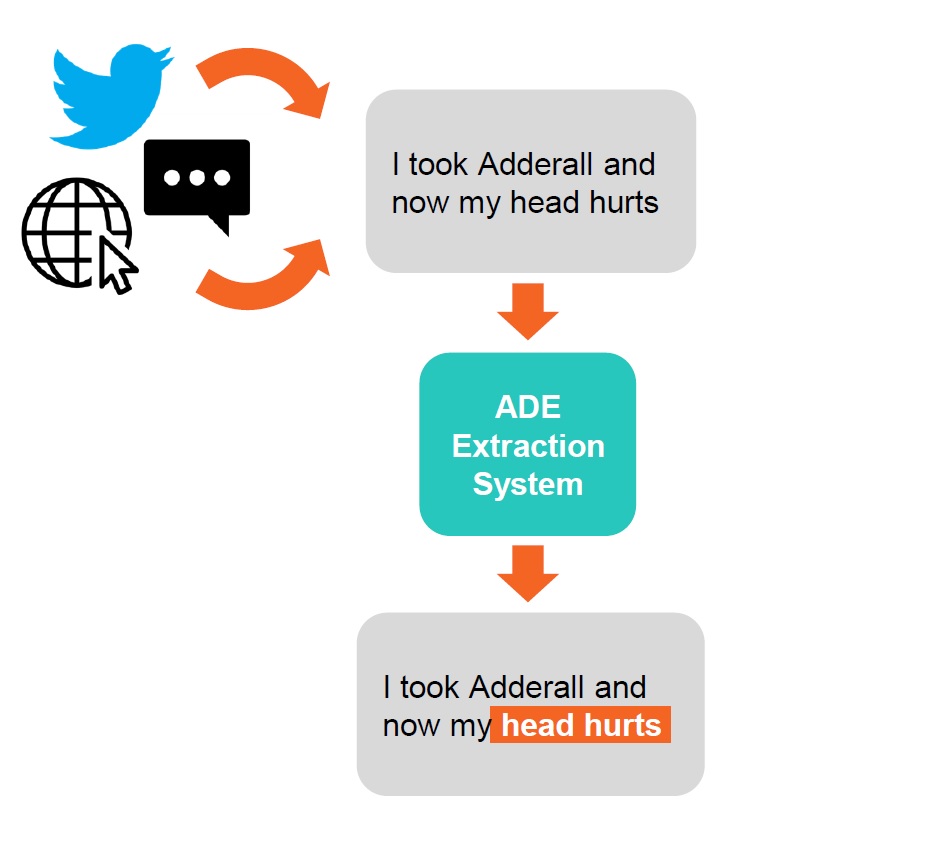
Regulators, such as the Food and Drug Administration (FDA) and the European Medicine Agency (EMA), approve every year dozens of drugs, after verifying their safety and therapeutic effectiveness in clinical trials. Sometimes, however, clinical trials are not sufficient to discover all potential Adverse Drug Events (ADE). Pharmacovigilance, therefore, monitors the drugs in the market to ensure that unexpected effects are immediately identified and actions are taken to minimize their harm. This process relies on formal reporting methods, such as physician notes. However, a constantly growing number of patients prefers to describe the side effects on social media platforms, health forums and similar outlets. Patients have started reporting Adverse Drug Event (ADE) on social media, health forums and similar outlets, often utilizing informal language. Given the need to monitor these sources for pharmacovigilance purposes, systems for the automatic extraction of ADE are becoming an important research topic in the NLP community. Recent shared tasks on the topic of ADE extraction have […]


Predictive Maintenance

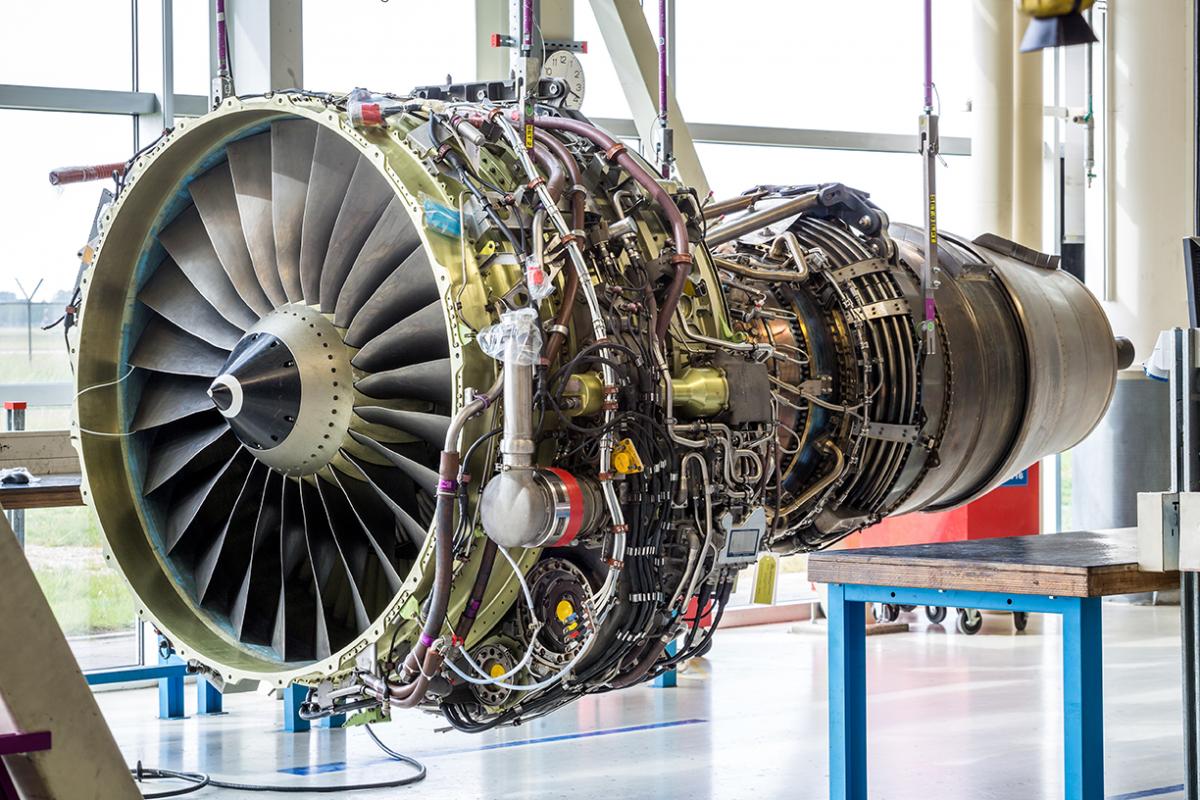
The remaining useful life (RUL) estimation of a component is an interesting problem within the Prognostics and Health Management (PHM) field, which consists in estimating the number of time steps occurring between the current time step and the end of the component life. Being able to reliably estimate this value can lead to an improvement of the maintenance scheduling and a reduction of the costs associated with it. Data driven approaches are often used in the literature and they are the preferred choice over model-based approaches: in fact, not only they are easier to build, but the data over which they are built can be gathered easily in many industrial applications. During the last years, neural networks like Long Short-Term Memory (LSTM) and Convolutional Neural Networks (CNN) have found many applications in this area, this because of their suitability to uncover hidden patterns within the sensor data.ย In recent years a greater availability of high quality sensors and easiness of data […]


Lecture 7th May 2020 – Beyond Hand-Crafted Networks:
Neural Architecture Search

Beyond Hand-Crafted Networks: Neural Architecture Search Dott. Stefano Alletto ๏ปฟ Online lecture – Thursday, 07 May 2020, 08:30 a.m. (GMT+1) With the performance on several benchmarks approaching saturation, pushing the state of the art is often a tedious process of hyperparameter tuning and network architecture optimization. Finding the perfect neural network for a given task by hand is often impossible due to time constraints, but what if we could design a system capable of automatically designing architectures, test their performance and improve itself by looking at its previous mistakes?This is the goal of neural architecture search (NAS): an automated system that explores search spaces which size is beyond human capabilities, samples network structures from them and improves its decision making by using the performance of the architectures it finds as supervision. In this talk, after introducing this task more in detail, I will be giving an overview of recent NAS approaches, discussing the opportunities and limitations in the field. Finally, […]